
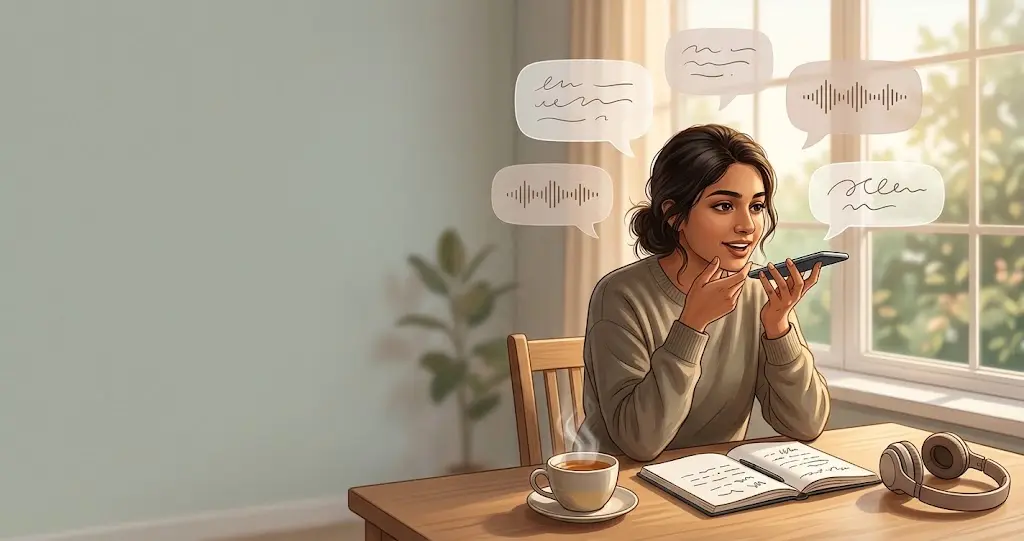
Do you understand English perfectly well when you read it, but freeze the moment you have to speak? You are not alone. For millions of learners, including many Urdu speakers, speaking is the hardest part of English. It is not because they lack intelligence. It is because they rarely get enough real speaking practice. The good news is that you can improve your English speaking at home, for free, with a few simple daily habits.
This guide gives you 15 practical ways to speak English more fluently and confidently, the mistakes that slow most learners down, and a 30-day practice plan you can start today. It has been updated for 2026.
The quick answer: how do you improve English speaking?
The fastest way to improve English speaking is to speak a little every day, out loud, and to get feedback on what you said. Listen to natural English, copy how fluent speakers say whole phrases, record yourself, and slowly move from talking to yourself to talking with real people. Reading and grammar help, but only speaking practice builds speaking skill.
Why speaking feels harder than reading or writing
When you read, you have time to think. When you speak, you must find the words, build the sentence, pronounce it and listen to the other person, all within a few seconds. That is why many learners know the grammar rules but still hesitate in conversation.
Speaking is a physical skill, like swimming or cycling. Your mouth and your brain need repetition, not just knowledge. Once you understand this, the solution becomes clear: less studying about English, more using English out loud.
15 simple ways to improve your English speaking
1. Start speaking from day one, even to yourself
Do not wait until your English is "good enough". Describe what you are doing while you cook, walk or get ready: "I am making tea. I need to add some sugar." Self-talk costs nothing, removes the fear of being judged, and trains your brain to produce English without translating from Urdu first.
2. Learn phrases, not single words
Fluent speakers do not build every sentence word by word. They use ready-made chunks such as "I'm looking forward to it", "to be honest" or "it depends on". Whenever you learn a new word, learn it inside a full phrase or sentence. This makes your speech faster and far more natural.
3. Practise shadowing
Shadowing means playing a short English audio clip and repeating it immediately after the speaker, copying the rhythm, stress and tone. Choose clips of 30 to 60 seconds, repeat each one several times, and focus on sounding like the speaker rather than just saying the same words.
4. Record yourself and listen back
Most learners avoid this because it feels uncomfortable, but it is one of the most powerful habits you can build. Record yourself speaking for one or two minutes on your phone, then listen for unclear words, long pauses and repeated mistakes. Try again the next day and compare. You will hear your own progress.
5. Think in English
Translating in your head slows you down. Start small: name the objects around you in English, then think simple sentences in English about your day, then longer thoughts. Over time the extra translation step disappears and your speech becomes faster.
6. Build a daily 15-minute speaking routine
Fifteen minutes every day beats two hours once a week. Pick a fixed time, for example after breakfast or before sleep, and do the same routine: five minutes of shadowing, five minutes of talking about a topic, five minutes of listening back to your recording. Consistency is what creates fluency.
7. Listen to real English every day
You cannot say naturally what you have never heard. Listen to podcasts, interviews, YouTube talks and news in English, and choose content slightly below your comfort level so you can follow most of it. Channels made for learners, such as BBC Learning English, are a good starting point.
8. Work on pronunciation, stress and intonation
Clear English depends less on a perfect accent and more on correct word stress and sentence rhythm. Many Urdu and Hindi speakers find sounds like "v" and "w", or "th" in "think" and "this", challenging. Look up how these sounds are made, practise them slowly in short word pairs, and use a mirror or your recordings to check your mouth position.
9. Find a speaking partner
Speaking with a real person teaches things that self-practice cannot: reacting quickly, asking for clarification and keeping a conversation going. Ask a friend or classmate who is also learning, join an English club or use a language-exchange app. Even two short conversations a week make a big difference.
10. Read aloud
Reading aloud trains your mouth to move smoothly in English and improves pronunciation and confidence. Take a short article, a page of a story or a news paragraph and read it out loud at a calm pace. Then read it again, faster and with more expression.
11. Talk about your day
Each evening, spend two minutes explaining what happened today, what went well and what you plan for tomorrow. Because the topic is your own life, you already have the ideas and can focus on finding English words. This is one of the easiest ways to build everyday vocabulary.
12. Do not fear mistakes
Mistakes are how speaking skill grows. If you stop every time you are unsure, you will never build speed. Keep going, say the sentence even if it is imperfect, and note the mistake afterwards. Being understood is more important than being perfect.
13. Learn vocabulary by topic
Instead of memorising long random word lists, study the words you actually need for a situation: introducing yourself, ordering food, job interviews, travelling, talking about your studies. After learning each group, make a few real sentences and say them out loud.
14. Watch English videos with subtitles, then without
Choose a short show, interview or lesson. Watch it first with English subtitles to connect sounds with spelling, then watch again without them to train your ears. Pause and repeat useful lines the way the speaker says them.
15. Use technology as a practice partner
Speech-to-text tools, voice notes and AI chat assistants can act as patient practice partners when nobody is available. Speak your answer, read the text the tool wrote down, and check whether it matches what you meant to say. If a word appears wrongly, your pronunciation may need work.
Common mistakes that slow down your progress
- Studying grammar for months without speaking out loud
- Waiting to feel "ready" before starting conversations
- Translating every sentence from Urdu before speaking
- Trying to copy an accent instead of focusing on clarity
- Practising for hours once and then stopping for weeks
- Comparing yourself to fluent speakers instead of your own past progress
- Learning words without ever using them in a sentence
A simple 30-day English speaking plan
Use this plan if you want a clear starting point. Each day needs only 15 to 20 minutes.
| Week | Focus | Daily practice |
|---|---|---|
| Week 1 | Build the habit | 5 minutes of self-talk, 5 minutes of shadowing, 5 minutes of listening to English |
| Week 2 | Sound clearer | Record one minute daily, listen back, and practise 3 to 5 difficult sounds or words |
| Week 3 | Talk with people | Two conversations this week with a partner, plus daily read-aloud practice |
| Week 4 | Speak with confidence | Give a two-minute talk on one topic every day and compare your recordings with week 1 |
At the end of week four, listen to your first recording and your latest one. The difference is usually the best motivation to continue.
How long does it take to speak English fluently?
There is no single answer, because it depends on your starting level, how often you practise and how much real English you hear and use. Learners who practise speaking every day usually notice more confidence and smoother speech within a few weeks, while reaching a high level of fluency takes months or years of steady practice. Focus on regular progress rather than a deadline.
Frequently asked questions
How can I improve my English speaking at home?
Practise out loud every day: talk to yourself, shadow English audio, read aloud, record your voice and listen back. Add short conversations with a partner as soon as you feel able to.
Can I learn to speak English fluently without a teacher?
Yes, many learners improve a great deal through self-study, because speaking practice mainly needs time and repetition. A teacher or partner is still very helpful for feedback, so combine both when you can.
How can I stop being afraid of speaking English?
Start in private by talking to yourself and recording your voice, then move to a friendly partner. The more often you speak, the less frightening it feels. Remember that being understood matters more than being perfect.
How many hours a day should I practise?
Fifteen to thirty minutes of focused speaking practice every day is enough for most learners. Regular short sessions work better than rare long ones.
Is grammar important for speaking?
Basic grammar helps you build correct sentences, but you do not need to master every rule before you speak. Learn grammar through examples you actually say out loud.
Final thoughts
Improving your English speaking is not about talent. It is about small daily actions repeated for weeks: speak, listen, record, correct and try again. Pick two or three ideas from this list, start today, and build from there.
Have your own experience learning English, or a tip that worked for you? Share your voice and your writing with The Opinions. This platform exists for the voices that deserve to be heard.